A Guide for Importers and Distributors
Most importers start with one category. A buyer lands on spark plugs because a local account asked for them, proves the supplier, and keeps reordering. The problem shows up later: a single category caps how much of each customer's order you can fill, and every category you do not carry is business handed to a competitor. A multi-category parts program is the fix, but it only works if the categories are chosen and shipped deliberately. This guide covers the framework.
1. Single Category vs Multi-Category: The Economics
The difference is more than extra SKUs. It is a different risk and cost structure.
| Factor | Single-category buying | Multi-category program |
|---|---|---|
| Risk | Concentrated in one line | Spread across several lines |
| Freight cost | One category per container | Mixed-container, lower per-unit cost |
| Customer value | One product | One-stop supply |
| Complexity | Low, few SKUs | Higher, more fitment data |
| Negotiating power | Weaker, volume fragmented | Stronger, volume consolidated |
The freight math is usually what forces the decision. Shipping one category means you pay for a container you are only half using. Consolidating ignition parts with sensors and electrical parts fills the container and spreads the cost across every line in it.
Fact: KEHO has supplied auto parts to importers in 80+ countries since 1995, holding ISO/TS 16949 certification (since 2012), CE marking, and SGS third-party verification (per company data).
2. Choose Categories That Pull Each Other
A multi-category program fails when the categories are random. It works when they sit in the same repair context, because then one sale creates the next.
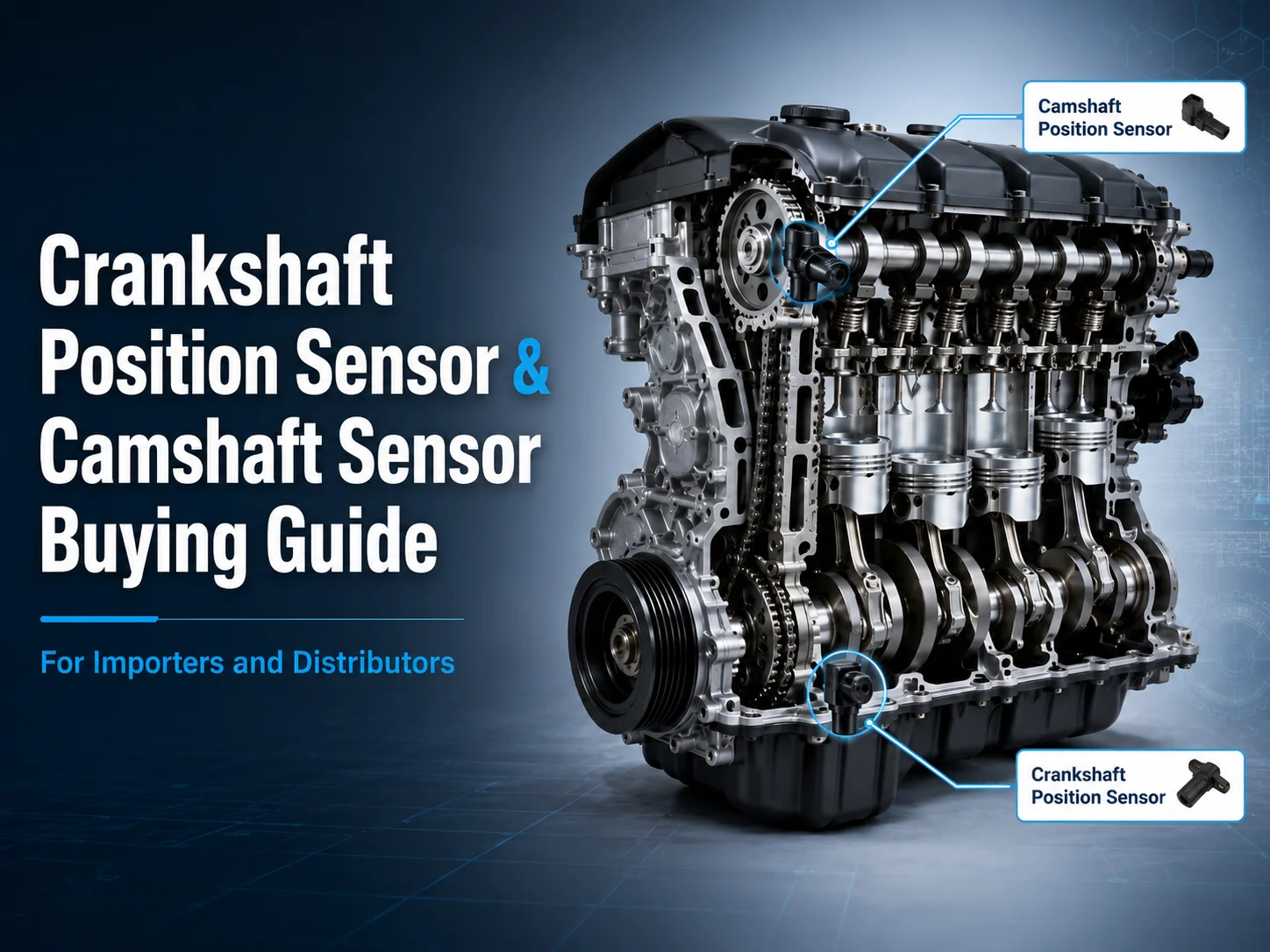
The cleanest example is the ignition group: spark plugs, ignition coils, and fuel injectors fail on the same engine and get replaced by the same shop. A customer who buys spark plugs from you is a live prospect for coils. The same logic runs through the sensor line: oxygen, crankshaft, and camshaft sensors live in the same engine bay and often ship on the same repair ticket.
The rule is to pair by repair context, not by price. Two cheap categories that never sell together do not help each other. Two mid-price categories that a mechanic reaches for in the same job do.
3. Mixed-Container Freight Is the Engine of the Program
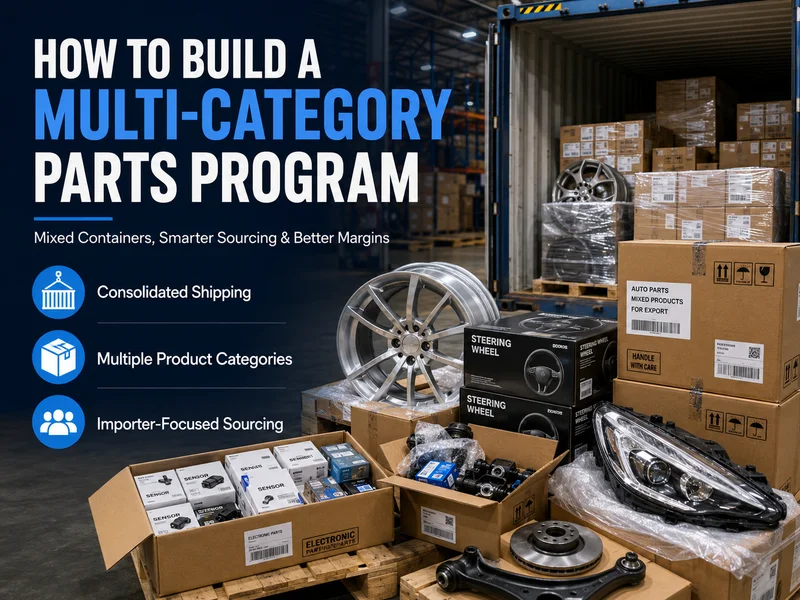
The cost advantage of a multi-category program only materializes if the categories actually ride in one container. That is mixed-container or consolidated shipping, and it is the difference between the program saving money and merely looking bigger.
Consolidating several categories into one container and one bill of lading cuts per-unit freight sharply and simplifies customs to a single entry. The discipline is to plan the mix before the order so the container is balanced and nothing arrives in a half-empty box. We walked through the mechanics in the low MOQ shipping guide; the point here is that mixed freight is the economic reason the program exists at all.
4. One Supplier or Several Specialists?
The supplier decision changes once you are buying across categories.
A single supplier with a wide catalog is usually the easier path for a multi-category program: one quality standard, one invoice, one consolidated shipment, and one point of contact when something is wrong. The cost of that convenience is concentration risk, which is exactly why the supplier vetting checklist matters more, not less, when you consolidate.
Several specialists can be cheaper line by line, but they multiply your coordination: separate quality checks, separate payment terms, separate freight, and a return process you have to run against each one. The savings usually evaporate in management time unless you have the volume to justify it.
Fact: KEHO maintains 50,000+ SKUs across six production lines with 500+ workers and a 99.2% on-time delivery rate, backing parts with a 12-24 month warranty (per company data).
5. Fitment Data and the Trial-Order Discipline
The quiet cost of a multi-category program is fitment data. Every category adds OEM numbers, and every OEM number is a place to get the fitment wrong. The fix is one fitment file per category, keyed by OEM number and verified against vehicle make, model, year, and engine before anything ships. The same four-field check that we describe in the OEM matching guide applies to every line in the program.
Start each new category with a small trial order, validate fitment and demand on real vehicles, then scale the ones that move. A supplier that offers a flexible MOQ per SKU lets you test several categories without committing a container to each. Treat the first mixed order as a test of the whole program, not one product.
Fact: KEHO supports mixed-container orders across ignition, sensor, electrical, and chassis categories so importers can consolidate several product lines into one shipment (per company data).
6. FAQ: Multi-Category Program Questions From Real Buyers
What is the advantage of a multi-category parts program over single-category buying?
A multi-category program spreads risk across several product lines, lowers unit freight cost through mixed-container shipping, and lets you serve more of each customer's order instead of handing the rest to a competitor. The tradeoff is more SKUs to manage and more fitment data to keep straight.
Which categories pair well together?
Categories that fail or are replaced together pair best. Ignition parts such as spark plugs, ignition coils, and fuel injectors pull each other. Sensors such as oxygen, crankshaft, and camshaft sensors sit in the same engine bay and often get replaced in the same repair. Pairing by repair context rather than by price is what makes the program coherent to a shop.
How does mixed-container shipping work for a multi-category order?
You consolidate several categories into one container and one bill of lading instead of paying freight on each line separately. This cuts per-unit freight sharply and simplifies customs. The discipline is to plan the mix before the order so the container is balanced, which is what a supplier with mixed-program experience handles for you.
Should I use one supplier for all categories or several specialists?
For a multi-category program, a single supplier with a wide catalog is usually easier to manage: one quality standard, one invoice, one consolidated shipment, and one point of contact for returns. The risk is putting all eggs in one basket, so vet that supplier carefully. Multiple specialists can be cheaper line by line but multiply your coordination cost.
How do I handle MOQ across several categories?
Start each category with a small trial order to validate fitment and demand, then scale the ones that move. A supplier that offers a low or flexible MOQ per SKU lets you test several categories without committing a container to each. Treat the first mixed order as a test of the whole program, not just one product.
How do I manage OEM numbers and SKUs across categories?
Keep one fitment file per category, keyed by OEM number and verified against vehicle make, model, year, and engine before the order ships. When the program spans several categories, the same four-field check applies to every line, which is why a supplier that does fitment verification per SKU saves you the work.
7. Conclusion: Consolidate the Categories, Not Just the Container
A multi-category program is a business decision before it is a logistics one. Choose categories that pull each other, consolidate them into one container, pick a supplier you have actually vetted, and keep the fitment data clean. When those four hold, the program lowers your cost and widens your customer account in the same move.
KEHO has supplied multi-category programs to importers for 30 years (per company data), with 50,000+ SKUs across ignition, sensor, electrical, and chassis lines ready for mixed-container orders. Send your target categories and vehicle list, and we will map the fitment and plan the consolidated shipment before you commit.
Sources
- [KEHO]. Company data: certifications, quality control process, warranty, delivery rate, SKU count, and mixed-container capability. kehoauto.com: Company-reported figures marked "(per company data)" in the article body.