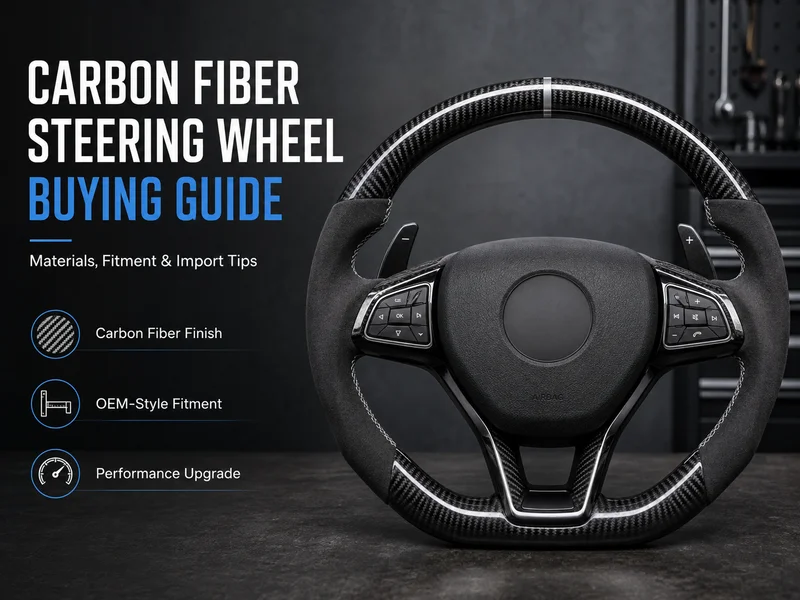
A carbon fiber steering wheel is a high-margin part with a fitment trap hidden in it. The material is the easy sell. The hard part is that every wheel has to match the airbag, the button layout, and the spline of a specific vehicle, and getting any one of those wrong turns a premium part into a return. This carbon fiber steering wheel buying guide covers the two decisions that matter: the replacement route, and the fitment fields you verify before you pay.
If you are sourcing for performance and tuning shops, the buyer is not a commuter. They are installing the wheel for a customer who cares about the material and the profile, which means the part has to be right the first time.
1. OEM Replacement vs Modification Upgrade
Steering wheels split into two routes, and they carry different risk and margin.
OEM replacement keeps the factory shape and function, just in a different material. The stock airbag and multifunction buttons are reused, so the install is a straight swap and the risk is low. This is the route for a shop that wants to offer a premium look without touching the safety system.
Modification upgrade changes the shape, usually to a flat-bottom or racing profile, and may change the rim thickness and grip. It sells at a higher margin, but it needs tighter fitment checking because the airbag module and electronics have to transfer cleanly.
| Factor | OEM replacement | Modification upgrade |
|---|---|---|
| Shape | Factory round or original | Flat-bottom or racing profile |
| Airbag | Reuses stock airbag | Transfers module, must verify |
| Buttons | Reuses stock layout | May change layout |
| Install risk | Low, straight swap | Higher, needs verification |
| Margin | Standard | Higher |
| Buyer | Daily drivers wanting premium look | Performance and track customers |
For a distributor, the practical split is to stock OEM replacement as the volume line and modification upgrade as the specialist line. The upgrade is where the margin is, but it is also where the returns concentrate if fitment is not verified.
Fact: KEHO has supplied auto parts to importers in 80+ countries since 1995, holding ISO/TS 16949 certification (since 2012), CE marking, and SGS third-party verification (per company data).
2. Material Choice: Carbon Fiber, Nappa, Alcantara
The material is the selling point, and each one fits a different end customer.
Carbon fiber reads sporty and premium, is lighter and stiffer than a leather wrap, and holds its value with performance buyers. It is the flagship material for the tuning market.
Nappa leather reads luxury and daily-drivable. It is soft, ages well, and appeals to buyers who want an upgraded feel without a race-car look.
Alcantara grips better than both and is favored for track use, but it shows wear faster and needs more care. It is a lower-volume specialist option.
A distributor should stock carbon fiber and Nappa as the core, with Alcantara kept shallow until a customer base for it shows up.
3. The Fitment Fields That Decide the Order
A steering wheel is not a universal part. The fitment has to be verified against the exact vehicle.
Vehicle and configuration is the first gate. The same chassis can ship with different wheel options, so match by make, model, year, and the factory wheel configuration rather than a generic aftermarket SKU.
Airbag compatibility is the second gate and the one that cannot be guessed. A wheel that does not accept the vehicle's airbag module, or does not mount it correctly, is a safety issue, not just a fitment issue. Confirm it against the chassis before you commit.
Button layout and spline are the third and fourth gates. The multifunction buttons and the mounting spline differ across platforms, and a wheel with the wrong either one will not install. The reliable keys are the OEM number and chassis code, the same way you would match any other part; our guide on matching auto parts by OEM number walks through the method.
Fact: KEHO's steering wheel line covers Toyota and BMW platforms in carbon fiber, Nappa leather, and flat-bottom styles, priced from $ 89 to $ 389 per piece (per company data).
4. How to Vet a Steering Wheel Supplier
Most of what goes wrong with a steering wheel order is decided before the container ships. The checks are the same discipline you would apply to any supplier, applied to a part where the failure mode is fitment, not wear.
Certifications. ISO/TS 16949 (now IATF 16949) is the automotive-specific quality standard that matters; CE matters for Europe. Ask for the certificate number and verify it.
Fitment support. A good supplier confirms airbag compatibility, button layout, and spline against your chassis list. A bad one ships whatever you typed. The full checklist is in our guide on vetting a Chinese auto parts supplier.
Batch consistency. Wheels in the same order should come from the same core, wrap, and trim supplier. Mixed batches create a support problem where part of your SKU looks or fits differently from the rest.
5. MOQ, Mixed Containers, and the Real Cost
Steering wheels are bulky, mid-value parts. Freight and packaging shape the landed cost more than the unit price.
Start small. A new platform should begin with a trial batch, not a full container, so you can test fitment and install feedback on real vehicles before committing to volume. KEHO's steering wheel line supports a one-piece minimum (per company data), which keeps that trial cheap.
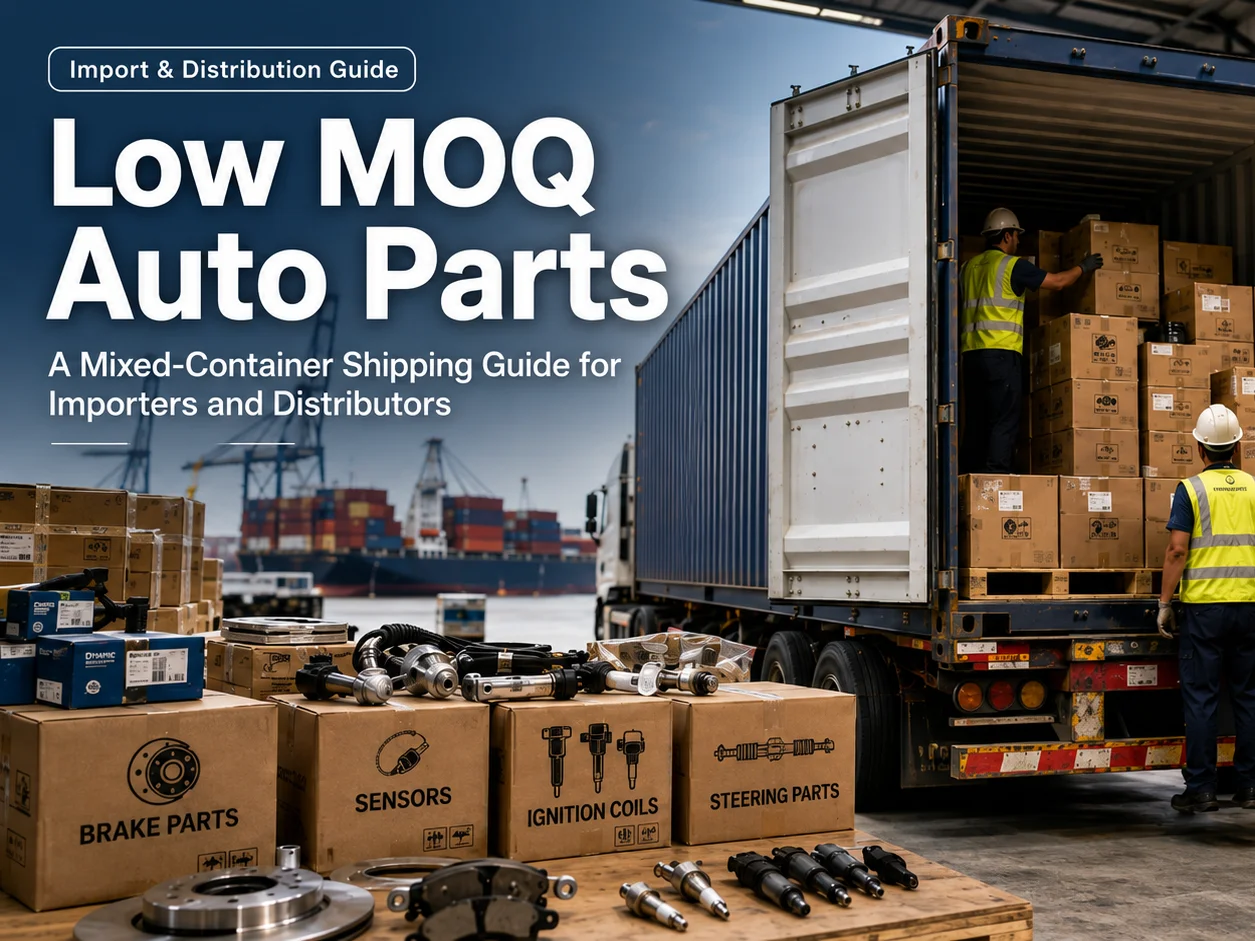
Mix the container. Steering wheels ship well alongside other interior and electrical parts, spreading freight across more SKUs. Our low MOQ shipping guide covers consolidating mixed categories into one shipment.
Count the warranty. A cheaper wheel with a loose warranty process can cost more than a slightly pricier one that handles claims cleanly. For a premium cosmetic part, the warranty and the finish quality are part of the product.
Fact: KEHO maintains 50,000+ SKUs across six production lines with 500+ workers and a 99.2% on-time delivery rate, backing parts with a 12-24 month warranty (per company data).
6. FAQ: Steering Wheel Questions From Real Buyers
What is the difference between a carbon fiber steering wheel and a stock wheel?
A stock wheel is usually molded plastic or basic leather over a round rim. A carbon fiber wheel replaces or wraps sections of the rim in real carbon fiber, which is lighter, stiffer, and gives a more aggressive look, and it is often combined with a flat bottom for a sportier profile. The function stays the same; the material, feel, and appearance change.
Does an aftermarket steering wheel affect the airbag or safety?
It can, which is why the fitment route matters. An OEM-style replacement keeps the original airbag and multifunction buttons because it reuses the stock core. A full custom wheel may require transferring the airbag module and electronics, and the airbag compatibility has to be confirmed for the exact vehicle. A proper supplier verifies this against the chassis before shipping, rather than leaving it to the installer.
How do I confirm a steering wheel fits a specific vehicle?
Match it by vehicle make, model, year, and the factory steering wheel configuration, not by a generic aftermarket SKU. Confirm the airbag type, the multifunction button layout, and the mounting spline, because the same chassis can ship with different wheel options. The OEM number and chassis code are the reliable keys, the way you would match any other part by OEM number.
What is the difference between OEM replacement and a modification upgrade?
An OEM replacement keeps the factory shape and function, just in a different material like carbon fiber or Nappa leather, and it reuses the stock airbag and buttons. A modification upgrade changes the shape, typically to a flat-bottom or racing profile, and may change the rim thickness and grip. Replacement is lower risk; upgrade is higher margin but needs tighter fitment checking.
How do I choose between carbon fiber, Nappa leather, and Alcantara?
It depends on the end customer. Carbon fiber reads sporty and premium and holds its value with performance buyers. Nappa leather reads luxury and daily-drivable and ages well. Alcantara grips better and is favored for track use but shows wear faster. A distributor should stock carbon fiber and Nappa as the core, with Alcantara as a lower-volume specialist option.
What should I check in a steering wheel supplier before a bulk order?
Check certifications first, ISO/TS 16949 (now IATF 16949) and CE for Europe. Then fitment support, meaning the supplier confirms airbag compatibility, button layout, and spline against the chassis list. Then warranty terms, MOQ flexibility to test a new platform with a small batch, and response time on technical questions. A supplier that cannot confirm airbag compatibility same day is not ready for your program.
7. Conclusion: Fitment Is the Product
A steering wheel program lives or dies on airbag compatibility, button layout, and spline. Get those right and the material sells itself. Get one wrong and the premium part becomes a return you bought.
KEHO has supplied performance and interior parts to importers for 30 years (per company data), and the same fitment discipline applies across the steering wheel line, which covers Toyota and BMW platforms in carbon fiber, Nappa leather, and flat-bottom styles from $ 89 to $ 389 per piece (per company data). Send your chassis list and we will confirm airbag and button fitment before you commit to the first batch.
Sources
- [KEHO]. Company data: certifications, quality control process, warranty, delivery rate, and steering wheel line pricing. kehoauto.com: Company-reported figures marked "(per company data)" in the article body.